A photograph can make Kilimanjaro look like a single destination at the top of a mountain. The landscape is more layered than that. Forest, open moorland, exposed ground and summit country belong to the same mountain, but they ask for different kinds of attention. Understanding that variety is useful even before you consider a particular walk or trek.
Begin with the whole mountain
UNESCO describes Kilimanjaro as an isolated volcanic massif and identifies Kibo, Mawenzi and Shira as its three principal volcanic forms. They are useful names to keep separate when reading a guide or choosing photographs. A view of Mawenzi should not be labelled as Kibo, and a picture of Shira’s open country tells a different story from a close summit view.
Think about distance as well as height. From farther away, the mountain has a relationship with the surrounding land and sky. Closer in, a path, plant or rock face can fill the whole view. Neither distance is the complete mountain. A useful visit leaves room for both the broad setting and the details that give it texture.
Watch the vegetation change
The World Heritage account distinguishes lower slopes, montane forest, heath and moorland, alpine desert and summit. These are an orientation to a varied environment, not a promise that every itinerary passes through identical scenes in identical weather. A photograph records one place and one moment; its conditions cannot stand in for your travel dates.
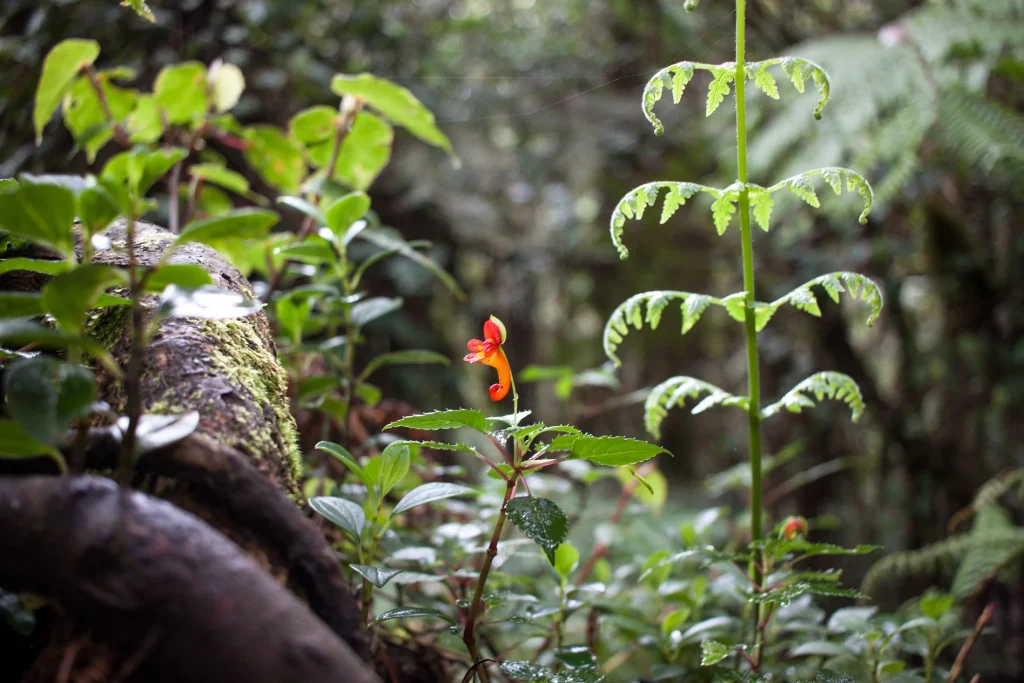
Impatiens flowers on the forested Machame approach, January 2019. Didier Trécherel / Source / CC BY-SA 4.0. Resized.
In forest images, look beyond the biggest trees. A flower, a mossy branch or a patch of shade can show something that a wide mountain view misses. In more open country, notice how the size and spacing of plants change. Those observations give your questions to a guide a useful starting point.
Make room for close details
Plant portraits and broad views work well together. The close image makes shape and texture legible; the wide image shows the relationship between that subject and its surroundings. Keep those roles distinct when choosing what to photograph. There is no need to repeat the same distant summit photograph throughout a day’s record.
Three ways to read a landscape
Distance
What to notice
A useful question
Wide view
Mountain form, surrounding land and cloud
Which part of the massif is visible?
Middle distance
Vegetation, paths and shelter
How does this setting differ from the last?
Close view
Leaves, flowers and rock surfaces
What makes this detail belong here?
Keep the names attached to the pictures
A simple caption can do a great deal of work. Record the identified location, the subject and the date if you know them. If a guide helps identify a plant or place, ask how they would like that knowledge credited. Do not give a photograph an exact name simply because a similar image appears elsewhere online.
Keep the original context alongside edited or cropped photographs.
Distinguish an image date from current conditions.
Ask before making a person the subject of a portrait.
Turn the landscape into a planning question
Decide which environments interest you, then discuss the possibilities with an appropriate licensed operator. A desire to see forest or moorland is a starting point for that conversation, not an itinerary on its own. Ask what the proposed day actually includes and how it fits the rest of your trip. See our trek-planning questions before comparing offers.
The lower mountain deserves more than a hurried introduction to a summit photograph. A forest flower, a changing view through trees or time spent in the surrounding area can shape how you remember Kilimanjaro. Give those interests a place in the plan from the beginning, rather than hoping they will fit into spare time.
Choose a subject before choosing a pace
Start with what you want to understand. You might be interested in forest vegetation, photography, the mountain’s broader setting or a quiet day between longer travel commitments. Naming that interest makes it easier to ask useful questions about a proposed visit. A general promise of scenery tells you much less than a clear explanation of where a day goes and what it involves.
TANAPA lists lower-forest nature walks and guided day hikes among Kilimanjaro’s visitor activities. That does not make every route a casual walk or every setting freely accessible. Confirm the exact arrangements, guiding and access for the activity you are considering. Read an activity’s own requirements rather than inferring them from a photograph.
Look for the small changes
A close view asks you to slow your attention. Look at the shape of a leaf, the way a flower sits on its stem or the different surfaces within a patch of forest. You do not need to collect a long list of species names for the experience to be meaningful. An accurately described observation is more useful than a confident but uncertain identification.
The forest photograph accompanying this guide was made on the Machame approach in January 2019. It is an image of a particular subject at a recorded time, not a current flowering forecast. That distinction is worth keeping in mind whenever seasonal photographs help you choose a destination.
Keep a simple observation record
Note the place name supplied by your guide or the source of the visit information.
Separate what you saw from what you inferred.
A flower’s colour and shape are observations.
A species name needs a reliable identification.
Keep a few wider photographs so close details do not lose their setting.
Ask a local professional how they describe the place. Their work is more than providing a background to a visitor’s photograph. If you want to quote someone or publish a portrait, explain the intended use and seek their permission. An ordinary courteous conversation is a better starting point than treating people as part of the scenery.
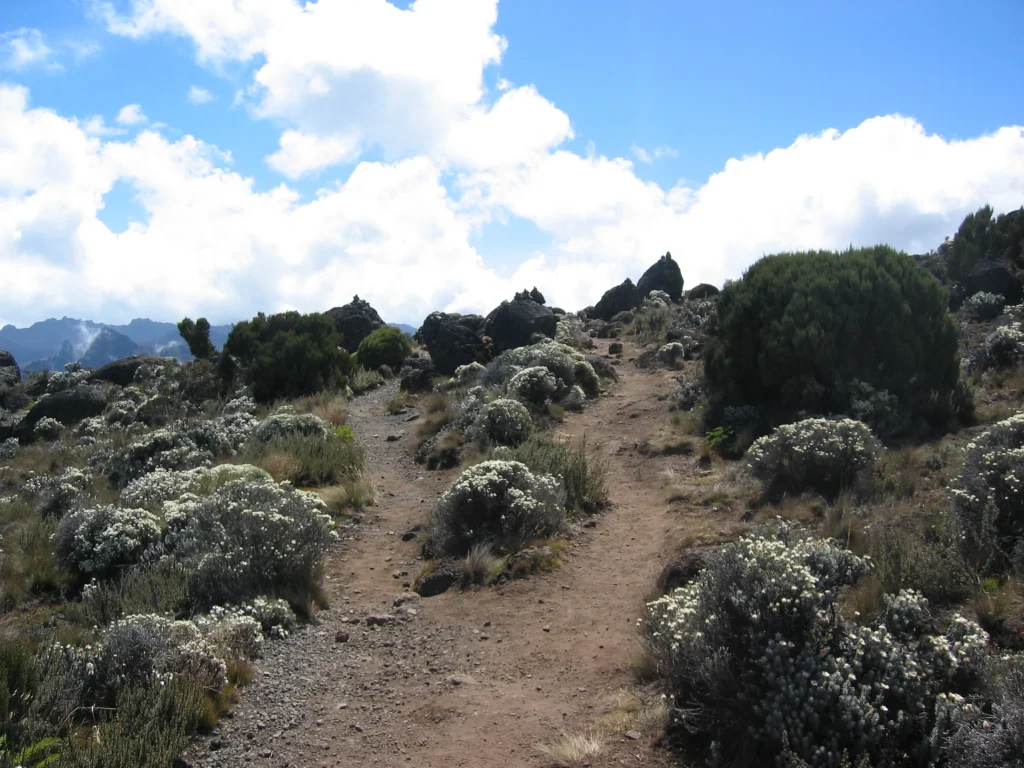
A path through Shira moorland, photographed in 2006. Skeptic cdn at English Wikipedia / Source / Public domain. Resized.
Leave room around the visit
Travel days, check-in arrangements and the next morning’s plans all affect how much attention you can give a place. Avoid treating every available hour as a slot that must be filled. When comparing a day activity, look at the complete sequence from pickup to return, not just the time described at the main stop.
Questions for a lower-mountain day
Interest
What to clarify
Forest and plants
The actual setting and the scope of guiding
Photography
Time to stop, permission and weather alternatives
A gentler travel day
Walking demands, transfers and the return time
Keep the mountain and its surroundings connected
Discuss your full lower-mountain plan with the people arranging it and ask for the booking details in writing. Use our guide to choosing a base to compare travel time and arrival arrangements from your options.
For the current activity framework, consult TANAPA’s Kilimanjaro attractions and its visitor guide. This editorial introduction does not replace the arrangements for a specific guided visit.
A trek description is a starting point for a conversation. Attractive photography and a familiar route name do not tell you everything about the experience being offered. Before making a booking, turn the outline into a clear account of the days, the professional support and the arrangements that matter to you.
Ask who is arranging the experience
TANAPA’s visitor guide states that Kilimanjaro climbs require a licensed operator. Establish who is responsible for your proposed itinerary and who you will communicate with before departure. If a booking is offered through an intermediary, understand the relationship between that service and the operator delivering the trek.
A good set of questions does not need to sound technical. Ask for the full operator name, the relevant arrangements and clear contact details. Keep the written itinerary and booking terms together so you can compare like with like. Do not treat a picture of a guide or a logo on a listing as proof of a particular person’s involvement.
Read the complete sequence of days
Look beyond the headline duration. Ask where the experience starts, when the initial briefing takes place, how transfers work and what happens at the end. Clarify whether arrival and departure days are part of the stated itinerary. Those details affect accommodation, onward travel and the practical shape of the whole trip.
Ask the operator to explain the route and the approach to acclimatization in terms appropriate to you. Personal health suitability and altitude advice belong with qualified medical advice and the professional team responsible for the trek. A destination article, a photograph or someone else’s successful trip cannot establish your individual suitability.
Separate the included items from assumptions
Compare the written offer
Part of the trip
Clarify before booking
Transfers
Locations, timing and who arranges them
Accommodation
Before, during and after the trek
Equipment
What is supplied, rented or your responsibility
Support
Briefing, team roles and communication
Changes
Cancellation, itinerary changes and contingency arrangements
Use the table as a prompt, not as a claim that every operator offers the same package. Ask what each item means in the particular offer. Written answers make a comparison more useful than an unsupported best-value label or a list of attractive extras.
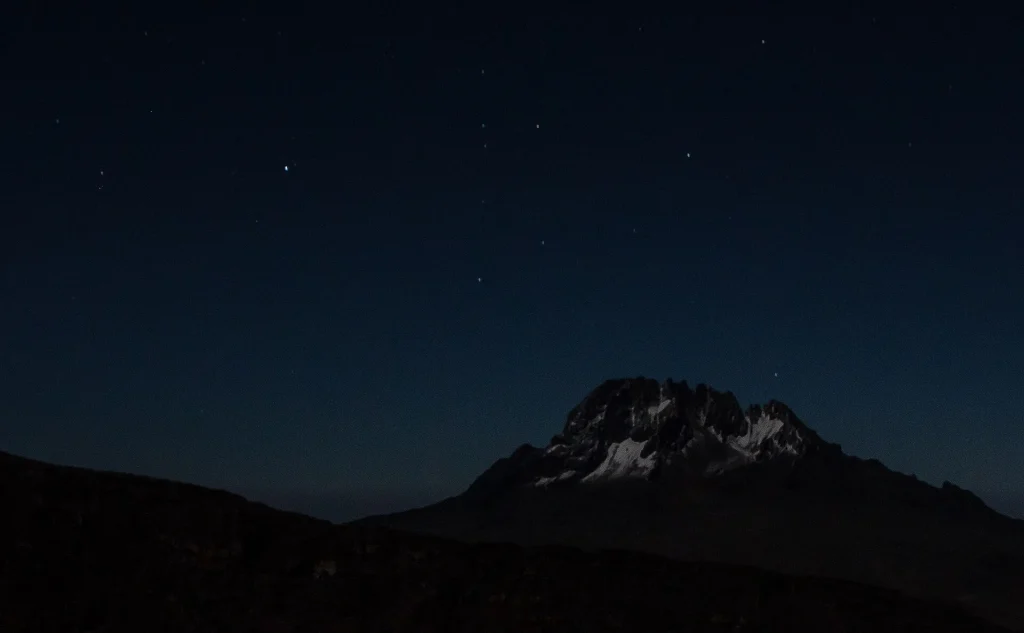
Mawenzi photographed at night, January 2019. Didier Trécherel / Source / CC BY-SA 4.0. Resized.
Recognize the work of the mountain team
Guides, porters and other professionals make a substantial contribution to a trek. Ask about the team’s roles and working arrangements with the same care you give your own schedule. Responsible planning includes attention to the people doing that work; it is not limited to the visitor’s equipment and photographs.
Ask how the operator describes its staff arrangements.
Keep team and visitor expectations clear before departure.
Seek permission before making or publishing individual portraits.
Avoid reducing skilled work to anonymous background imagery.
Keep a decision record
Once the main questions have answers, compare the whole proposal against your needs. Note any unresolved point and ask for clarification before relying on it. Avoid making a quick decision because a page suggests that a particular outcome is guaranteed. The mountain’s conditions and an individual’s experience cannot be reduced to a promise of summit success.
Where you stay around Kilimanjaro should follow the shape of your trip. A room before a trek, a place to return to afterward and a base for a lower-mountain visit may have different priorities. Start with the practical sequence, then compare accommodation against it.
Distinguish nearby stays from mountain accommodation
The lead photograph shows the mountain from Shira 1 camp in December 2016. It is landscape context, not a listing for a hotel near the park or a promise about current camp facilities. Images of tents, huts and lodges are not interchangeable. Check which part of your itinerary an accommodation description actually refers to.
TANAPA’s visitor guide distinguishes huts on the Marangu route from designated tented camps on other routes, and identifies Moshi and Marangu as places with accommodation before or after a trek. These are broad planning distinctions. Confirm the actual itinerary and sleeping arrangements with the named operator rather than treating a general guide as a booking record.
Work outward from arrival and departure
Write down your arrival point and the next fixed commitment. Ask whether transfers are arranged, where you will be collected and where you will return. If the person arranging your trek recommends a particular stay, ask how it fits the briefing and departure schedule. Convenience is easier to judge once those details are explicit.
Then consider the return. You may want time to reorganize belongings, rest or prepare for onward travel. Confirm luggage storage, check-in and check-out arrangements directly with the accommodation when they matter to your plans. Do not infer a service from a photograph or a generic amenities description.
Compare the things you will actually use
Accommodation questions with a purpose
Your priority
A question to ask
Coordinating a trek
How does this stay connect to the briefing and pickup?
Arriving late
What are the confirmed arrival arrangements?
Returning with luggage
What storage and room arrangements are available?
Exploring nearby
How will the planned visits and transfers work?
Specific questions usually reveal more than broad descriptions such as convenient or comfortable. What feels convenient depends on where you are going next. What matters in a room depends on how you expect to use your time there.
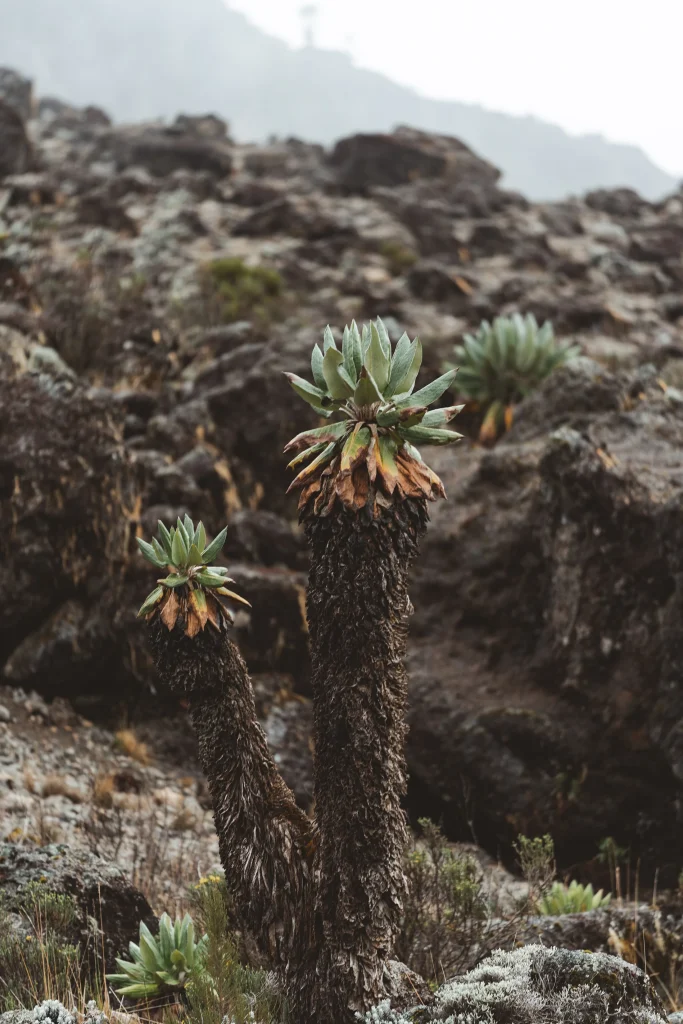
Groundsels in Kilimanjaro moorland, November 2018. Michael Mwakalundwa / Source / CC BY-SA 4.0. Resized.
Leave space for the surrounding destination
A stay can be part of the visit rather than simply a pause between transfers. If you want to explore the lower mountain or its surroundings, ask what is realistic from the proposed base and how it can be arranged responsibly. Keep these plans separate from assumptions about access to the national park.
For a shared trip, compare priorities together. One traveler may value a quiet return after a trek; another may want to spend more time around the lower slopes. A useful base is one that fits the actual people and itinerary, not a place that wins an invented universal ranking.
Check the booking record
Confirm the accommodation name and dates.
Keep the room, meal and transfer arrangements in writing.
Review cancellation and change terms from the named provider.
Record a clear contact for arrival questions.
Live lodging inventory is not currently presented in this guide. Use this page to prepare a comparison, then verify current details directly through the provider you choose. Read about giving the lower mountain its own time and consult TANAPA’s visitor guide for the broader park context.
The mountain may be the main reason for a trip, but the days around it deserve planning too. Arrival arrangements, a briefing, time in the surrounding area and the journey onward all belong to the same visit. Set them out together before treating a trek or day activity as an isolated booking.
Start with the fixed points
List the parts of the trip that already have a confirmed time or place. These might include arrival, accommodation dates, an operator briefing or onward travel. Keep confirmed information separate from ideas you are still considering. That simple distinction makes it easier to see what depends on what.
Discuss the complete sequence with the people arranging the relevant services. A transfer that works for one itinerary may not fit another. Ask for the meeting point and arrangements in writing, especially when different providers are responsible for different parts of the trip.
Give each day one clear purpose
A travel day, a day with a guided activity and a day set aside for the surrounding destination have different demands. Trying to make all of them equally full can make the plan difficult to follow. Decide what matters most on each day and leave the supporting details around that purpose.
A practical planning outline
Part of the visit
Main purpose
What to confirm
Arrival
Reach the agreed base
Pickup, check-in and contact details
Preparation
Understand the planned experience
Briefing and individual requirements
Guided activity
Follow the agreed itinerary
Operator responsibilities and current arrangements
Return
Reconnect with the wider trip
Accommodation, belongings and onward plans
Leave uncertain details visibly uncertain
Weather, access and provider arrangements should be checked through the people responsible for them. An old photograph can help you understand a landscape, but it is not evidence of conditions on your travel date. A general guide can explain the questions to ask, but it cannot confirm the availability of a particular service.
Keep a short list of what still needs verification. Give each item an appropriate source: the operator for its itinerary, the accommodation for its arrival arrangements, and the park authority for current park information. That is more useful than collecting conflicting fragments without noting where they came from.
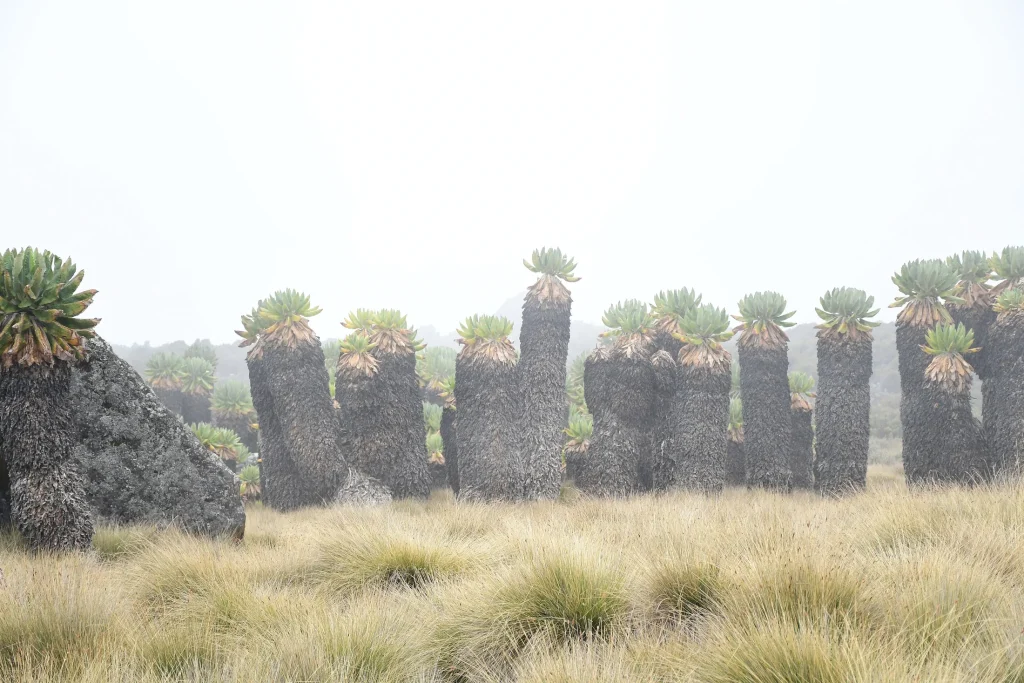
Giant groundsel detail on Kilimanjaro, March 2021. Altezzatravel / Source / CC BY-SA 4.0. Resized.
Plan for attention as well as movement
If landscapes and photography matter to you, say so when discussing an activity. Ask what the planned day involves and whether it allows time for the subjects that interest you. The answer may help you choose between different experiences without assuming that the most ambitious option is automatically the most rewarding.
The lower mountain has its own interest, and a trip does not need to be described only in terms of reaching a summit. Forest detail, open moorland and views of the volcanic forms can all shape the destination story. Make your interests clear while leaving the professional planning of a specific trek with the people responsible for it.
Keep the useful information together
One current itinerary rather than several competing drafts.
Confirmed provider and accommodation names.
Meeting points and the agreed communication method.
Booking terms and the outstanding questions to resolve.