

Where you stay around Kilimanjaro should follow the shape of your trip. A room before a trek, a place to return to afterward and a base for a lower-mountain visit may have different priorities. Start with the practical sequence, then compare accommodation against it.
Distinguish nearby stays from mountain accommodation
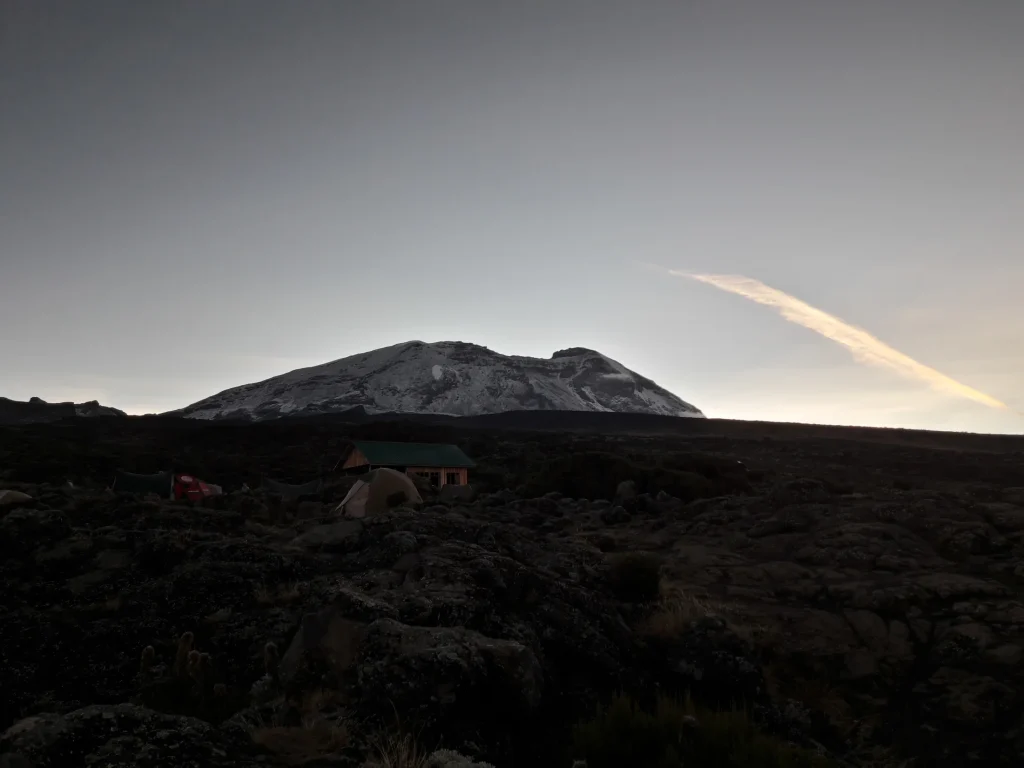
The lead photograph shows the mountain from Shira 1 camp in December 2016. It is landscape context, not a listing for a hotel near the park or a promise about current camp facilities. Images of tents, huts and lodges are not interchangeable. Check which part of your itinerary an accommodation description actually refers to.

Private Kilimanjaro Airport Transfer JRO ↔ Moshi/Arusha
We provide reliable, punctual private transfers with experienced local drivers. With flight tracking, flexible pickup times, and clear communication...

From Kilimanjaro Airport One Way Private Transfer to Arusha Town
The driver will be waiting for you ready to take you to the Northern Tanzania tourist town in an air-conditioned cl...

Private Airport & City Transfers in Arusha, Tanzania
Why Choose TrustWay Transfers? Reliable and Punctual: We value your time. Our drivers are trained to ensure timely...

5 Days Tanzania Big Cat Safari
Discover the breathtaking beauty of Tanzania on this unforgettable safari adventure through some of Africa’s most...
TANAPA’s visitor guide distinguishes huts on the Marangu route from designated tented camps on other routes, and identifies Moshi and Marangu as places with accommodation before or after a trek. These are broad planning distinctions. Confirm the actual itinerary and sleeping arrangements with the named operator rather than treating a general guide as a booking record.
Work outward from arrival and departure
Write down your arrival point and the next fixed commitment. Ask whether transfers are arranged, where you will be collected and where you will return. If the person arranging your trek recommends a particular stay, ask how it fits the briefing and departure schedule. Convenience is easier to judge once those details are explicit.
Then consider the return. You may want time to reorganize belongings, rest or prepare for onward travel. Confirm luggage storage, check-in and check-out arrangements directly with the accommodation when they matter to your plans. Do not infer a service from a photograph or a generic amenities description.
Compare the things you will actually use
| Your priority | A question to ask |
|---|---|
| Coordinating a trek | How does this stay connect to the briefing and pickup? |
| Arriving late | What are the confirmed arrival arrangements? |
| Returning with luggage | What storage and room arrangements are available? |
| Exploring nearby | How will the planned visits and transfers work? |
Specific questions usually reveal more than broad descriptions such as convenient or comfortable. What feels convenient depends on where you are going next. What matters in a room depends on how you expect to use your time there.

Leave space for the surrounding destination
A stay can be part of the visit rather than simply a pause between transfers. If you want to explore the lower mountain or its surroundings, ask what is realistic from the proposed base and how it can be arranged responsibly. Keep these plans separate from assumptions about access to the national park.
For a shared trip, compare priorities together. One traveler may value a quiet return after a trek; another may want to spend more time around the lower slopes. A useful base is one that fits the actual people and itinerary, not a place that wins an invented universal ranking.
Check the booking record
- Confirm the accommodation name and dates.
- Keep the room, meal and transfer arrangements in writing.
- Review cancellation and change terms from the named provider.
- Record a clear contact for arrival questions.

Materuni Waterfall and Coffee Plantation Half Day Tour
Enjoy a half-day tour to the edge of Mt. Kilimanjaro for: 1. Professional English speaking guide 2. Guided waterfall hike 3. Chagga hot lunch 4. Coffe...

Kilimanjaro one day hike experience by KILITA SAFARIS
Experience a scenic day hike on Mount Kilimanjaro via the popular Marangu Route, perfect for beginners and travelers...

Arusha National Park Private Safari
Arusha National Park is the closest national park to Arusha town covering an area of 137 sq. km and is about 60kms f...

Best Kilimanjaro hiking day trip tour From Arusha/Moshi
Majestic Mount Kilimanjaro is the awe-inspiring landmark of Tanzania but you don’t need to climb it to experience...
Live lodging inventory is not currently presented in this guide. Use this page to prepare a comparison, then verify current details directly through the provider you choose. Read about giving the lower mountain its own time and consult TANAPA’s visitor guide for the broader park context.