
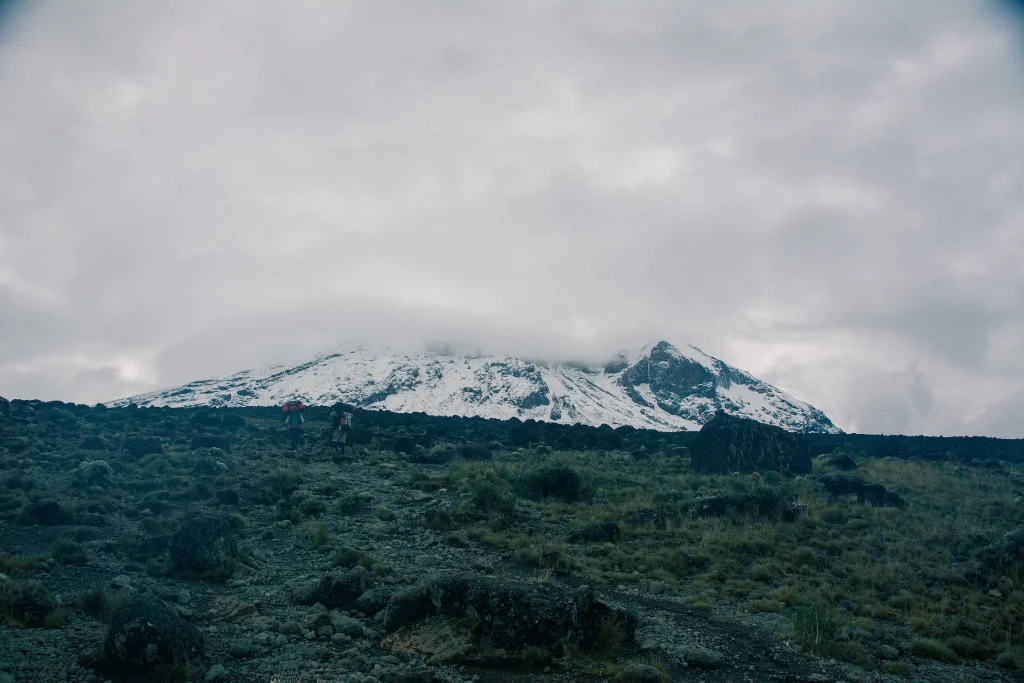
A photograph can make Kilimanjaro look like a single destination at the top of a mountain. The landscape is more layered than that. Forest, open moorland, exposed ground and summit country belong to the same mountain, but they ask for different kinds of attention. Understanding that variety is useful even before you consider a particular walk or trek.
Begin with the whole mountain
UNESCO describes Kilimanjaro as an isolated volcanic massif and identifies Kibo, Mawenzi and Shira as its three principal volcanic forms. They are useful names to keep separate when reading a guide or choosing photographs. A view of Mawenzi should not be labelled as Kibo, and a picture of Shira’s open country tells a different story from a close summit view.

The Most Complete 6-Day Kilimanjaro Marangu Route Climbing Guide
Our most complete 6-Day Marangu Route guide is one of the best Mount Kilimanjaro climbing tours and the most comfortable way to reach the summit, feat...

Kilimanjaro Day Trip from Moshi – Best One Day Hiking Tour
Why Choose Our Kilimanjaro Day Hike via Marangu Route? Experience Africa’s highest mountain in a single unforgettable day, without needing to reac...
Think about distance as well as height. From farther away, the mountain has a relationship with the surrounding land and sky. Closer in, a path, plant or rock face can fill the whole view. Neither distance is the complete mountain. A useful visit leaves room for both the broad setting and the details that give it texture.
Watch the vegetation change
The World Heritage account distinguishes lower slopes, montane forest, heath and moorland, alpine desert and summit. These are an orientation to a varied environment, not a promise that every itinerary passes through identical scenes in identical weather. A photograph records one place and one moment; its conditions cannot stand in for your travel dates.
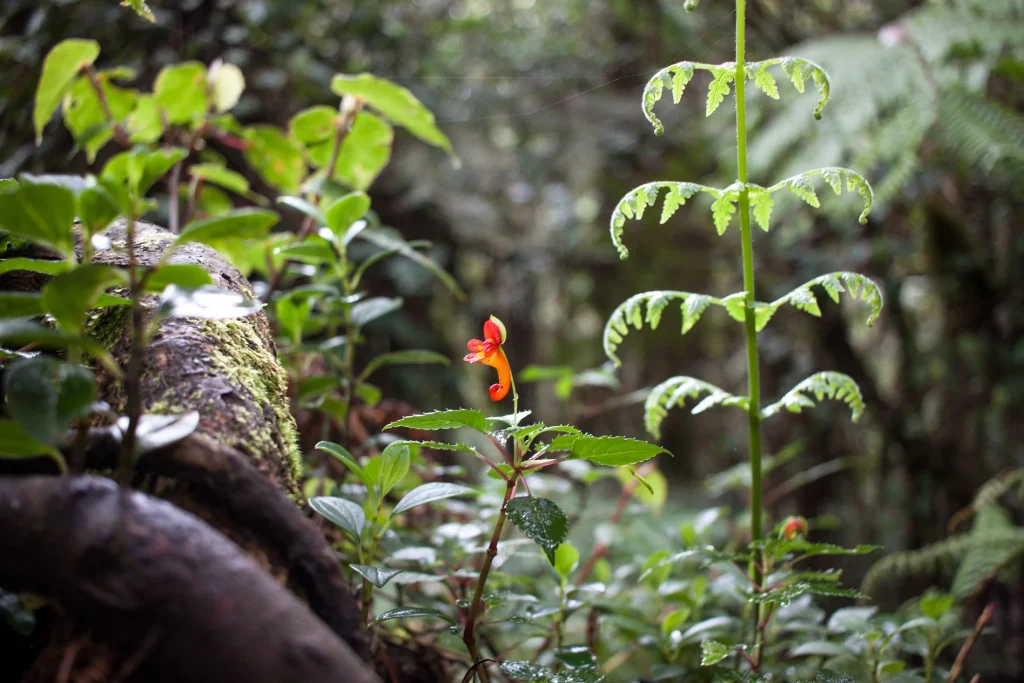
In forest images, look beyond the biggest trees. A flower, a mossy branch or a patch of shade can show something that a wide mountain view misses. In more open country, notice how the size and spacing of plants change. Those observations give your questions to a guide a useful starting point.
Make room for close details
Plant portraits and broad views work well together. The close image makes shape and texture legible; the wide image shows the relationship between that subject and its surroundings. Keep those roles distinct when choosing what to photograph. There is no need to repeat the same distant summit photograph throughout a day’s record.
| Distance | What to notice | A useful question |
|---|---|---|
| Wide view | Mountain form, surrounding land and cloud | Which part of the massif is visible? |
| Middle distance | Vegetation, paths and shelter | How does this setting differ from the last? |
| Close view | Leaves, flowers and rock surfaces | What makes this detail belong here? |
Keep the names attached to the pictures
A simple caption can do a great deal of work. Record the identified location, the subject and the date if you know them. If a guide helps identify a plant or place, ask how they would like that knowledge credited. Do not give a photograph an exact name simply because a similar image appears elsewhere online.
- Keep the original context alongside edited or cropped photographs.
- Distinguish an image date from current conditions.
- Ask before making a person the subject of a portrait.
Turn the landscape into a planning question
Decide which environments interest you, then discuss the possibilities with an appropriate licensed operator. A desire to see forest or moorland is a starting point for that conversation, not an itinerary on its own. Ask what the proposed day actually includes and how it fits the rest of your trip. See our trek-planning questions before comparing offers.

Affordable 7-day Machame Route on Kilimanjaro Group Hiking Tour
Join our week-long group tour explore the iconic and most popular Machame Route on Mount Kilimanjaro with our most a...

Mount Kilimanjaro 6 days - Machame route
The Machame Route is approximately 62 km/ 37 miles from gate to gate. It is designed for physically fit people with...

Mount Kilimanjaro 7 Days - Machame Route
Known as the “Whiskey” route, the Machame route is now the most popular route on the mountain. Compared with Mar...
UNESCO’s Kilimanjaro description provides the landscape context. Check TANAPA’s visitor guidance for current park information.
The Most Complete 6-Day Kilimanjaro Marangu Route Climbing Guide
Our most complete 6-Day Marangu Route guide is one of the best Mount Kilimanjaro climbing tours and the most comfortable way to reach the summit, feat...
Kilimanjaro Day Trip from Moshi – Best One Day Hiking Tour
Why Choose Our Kilimanjaro Day Hike via Marangu Route? Experience Africa’s highest mountain in a single unforget...

Kilimanjaro climb by Lemosho Route (7-day)
Embark on this epic 7-day Kilimanjaro Lemosho hiking adventure and enjoy thrilling scenic vistas and pristine wildli...

Climbing Kilimanjaro - Machame Route
All your equipment and supplies are carried by porters and a cook prepares all your meals. Unlike the Marangu Route...
Experiences to explore
 Explore experience ↗
Kilimanjaro Day Hike via Marangu – Forest to Mandara Hut
◷ 10 hr 30 min
Dreaming of Kilimanjaro but not ready for a multi-day trek? This 1-day hike gives you a real taste of the world’s tallest freestanding
From $500.00 USD
View dates Explore experience ↗
10 Day Great Migration Photographic Safari
◷ 240 hr
The Mkomazi National Park is framed by the green slopes of the spectacular Usambara and Pare mountain ranges. A huge drive-in sanctuary
From $11,099.00 USD
View dates Explore experience ↗
1 day tour hike mount kilimanjaro through marangu route
◷ 8 hr
This 1 Day tour Mount Kilimanjaro helps tourists who have short period of time in Tanzania to hike more than one day. Some tourists the
From $240.00 USD
View dates

